Показаны сообщения с ярлыком holidays. Показать все сообщения
Показаны сообщения с ярлыком holidays. Показать все сообщения
пятница, 13 января 2017 г.
вторник, 19 января 2016 г.
Light Pillars Appeared in Moscow Sky on Christmas
Better late than never, right? So we'd like to share another Christmas related post.
Muscovites have witnessed this rare natural phenomenon right on Christmas Eve.
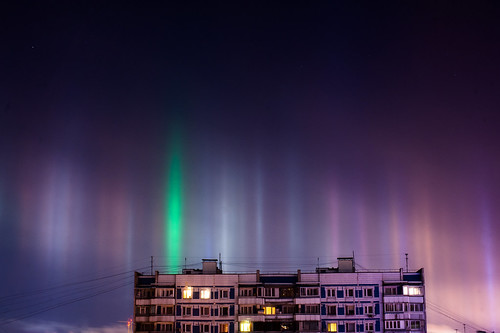 |
| Northern lights in Moscow / photo by Valeria Terpugova |

четверг, 14 января 2016 г.
В лесу родилась Ёлочка / The Forest Raised a Christmas Tree
The forest raised a Christmas tree (Russian: В лесу родилась ёлочка, V lesu rodilas yolochka) is a famous children's New Year song in Russia, by Raisa Kudasheva and Leo Beckmann.
четверг, 7 января 2016 г.
CHRISTMAS MESSAGE OF PATRIARCH KIRILL OF MOSCOW AND ALL RUSSIA
Patriarchal message in English and Russian languages
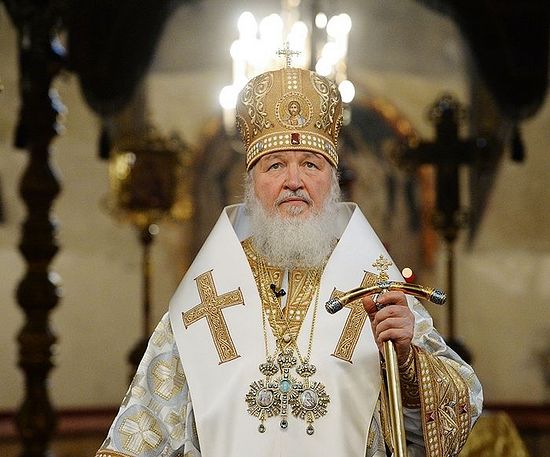
CHRISTMAS MESSAGE OF PATRIARCH KIRILL OF MOSCOW AND ALL RUSSIA
In this was manifested the love of God toward us, because that God sent his only begotten Son into the world, that we might live through him.
(1 Jn 4:9)
Your Eminences the archpastors, esteemed fathers,
all-honourable monks and nuns, dear brothers and sisters!
It is with a heart overflowing with joy in the Son of God who has come in the flesh that I address all of you and congratulate you on the radiant and life-bearing feast of the Nativity of our Lord and God and Saviour Jesus Christ.
“Glory to God in the highest, and on earth peace, good will toward men” (Lk 2:14). In glorifying from year to year the ineffable benevolence shown to us by the Saviour, we, as once the shepherds of Bethlehem who heard from the angel the “great joy, which shall be to all people” (Lk 2:10), hasten with spiritual eyes to see the Messiah, whose coming was foretold by the glorious prophets and awaited by a great multitude of men and women.
суббота, 2 января 2016 г.
С Новым Годом! / Happy New Year!
I'm sorry it's been so long since I updated this blog. So many things to do, but time is never enough. Hopefully this year I will be able to share more interesting stuff with all of you who is interested in Russia, its culture and language.
Thank you for visiting my blog and a Happy New Year!
Счастливого Нового Года!
среда, 23 февраля 2011 г.
Defender of the Fatherland Day - День защитника Отечества
Defender of the Fatherland Day (Russian: День защитника Отечества / Dyen' zashchitnika Otechestva) is a holiday observed in Russia, Tajikistan, Kyrgyzstan, Ukraine, Belarus and several other former republics of the Soviet Union. It is celebrated on February 23.
History
The holiday marks the date in 1918 during the Russian Civil War when the first mass draft into the Red Army occurred in Petrograd and Moscow. It was originally known as Red Army Day (Russian: День Красной Армии / Dyen' Krasnoy Armii). In 1949, it was renamed Soviet Army and Navy Day (Russian: День Советской Армии и Военно-Морского флота / Dyen' Sovyetskoy Armii i Voyenno-Morskogo flota). Following the fall of the Soviet Union in 1991, the holiday was given its current name.
Celebrations
Officially, as the name suggests, the holiday celebrates people who are serving or were serving the Russian Armed Forces (both men and women), but unofficially, nationally it has also more recently come to include the celebration of men as a whole, and to act as a counterpart of International Women's Day on March 8.
The holiday is celebrated with parades and processions in honor of veterans, and women also give small gifts to the Russian men in their lives, especially husbands (or boyfriends), fathers and sons. As a part of the workplace culture, women often give gifts to their male co-workers. Consequently, in colloquial usage, the holiday is often referred to as Men's Day (Russian: День Мужчин, Den' Muzhchin).
Source: wiki
Source: wiki
пятница, 14 января 2011 г.
Old New Year
The Old New Year (Russian: Старый Новый год) is a traditional holiday, celebrated as the start of the New Year (Новый год) by the Julian calendar (Юлианский календарь). In the 20th and 21st centuries, the Old New Year falls on January 13/14.
Although the Russian Soviet Federative Socialist Republic officially adopted the Gregorian calendar (Григорианский календарь) in 1918, the Russian Orthodox Church (Русская православная церковь) continued to use the Julian calendar. The New Year became a holiday which is celebrated by both calendars.
As in most countries which use the Gregorian calendar, New Year's Day in Russia is a public holiday celebrated on January 1. On that day, joyous entertainment, fireworks, elaborate and often large meals and other festivities are common.
The New Year by the Julian calendar is still informally observed, and the tradition of celebrating the coming of the New Year twice is widely enjoyed: January 1 (New New Year) and January 13 (Old New Year).
Usually not as festive as the New New Year, for many this is a nostalgic family holiday ending the New Year holiday cycle with traditional large meals.
via wiki
суббота, 8 января 2011 г.
Russian Orthodox Christmas
 |
| 17th century Christmas card |
During the Soviet era, religious celebrations were discouraged by the officially atheist state. As a result, Christmas celebrations in Russia were not common as in Western countries. Instead, emphasis was shifted to the secular New Year celebration. In the Russian Orthodox Church, Christmas is celebrated on the January 7 (or strictly speaking, December 25 on the Julian Calendar, which is now 13 days behind the internationally used Gregorian Calendar). The tradition of celebrating Christmas has been revived since 1992, after decades of suppression by the Communist government. It is now a national holiday and increasingly important, but many Russians continue to focus on the New Year's celebration.
Unlike its Western counterparts, Christmas is mainly a religious event in Russia. On Christmas Eve (6 January), there are several long services, including the Royal Hours and Vespers combined with the Divine Liturgy. Devout families will then return to church for the "всеночная" All Night Vigil. Then again, on Christmas Morning, for the "заутренняя" Divine Liturgy of the Nativity.
During the Soviet period, Christmas traditions were largely kept alive by shifting many of them, including the visit by gift-giving "Dyed Moroz" (Дед Мороз) "Grandfather Frost" and his granddaughter, "Snegurochka" (Снегурочка) "The Snowmaiden", to New Year's Day. Many current Russian Christmas customs have been preserved through the New Year's celebration. This includes the decoration of a tree, or "yolka" (spruce, or sometimes pine), festive decorations and family gatherings.
via wiki
Hymns
Divna Ljubojevic - Troparion (Tone 4)
Тропарь праздника (глас 4)
Рождество Твое, Христе Боже наш,
возсия мирови свет разума,
в нем бо звездам служащии
звездою учахуся Тебе кланятися,
Солнцу Правды,
и Тебе ведети с высоты Востока.
Господи, слава Тебе!
|
Troparion (Tone 4)
Your Nativity, O Christ our God,
Has shone to the world the Light of wisdom!
For by it, those who worshipped the stars,
Were taught by a Star to adore You,
The Sun of Righteousness,
And to know You, the Orient from on High.
O Lord, glory to You!
|
суббота, 1 января 2011 г.
President's New Year's Address to the Nation and Russian National Anthem
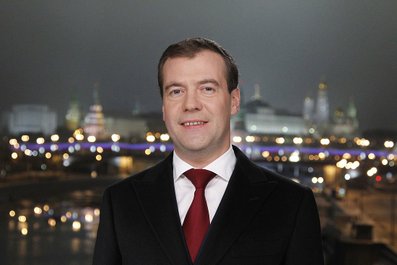 |
Photo: the Presidential Press and Information Offices address to the nation. December 31, 2010 |
Ever since the late 90’s, watching the New Year’s message from the President minutes before midnight has become a tradition everyone actually waits for. Usually, the President talks about the past year: what went wrong, what was good. It is basically a wrap-up of the year past, and wishes for a good year to come.
Interestingly, Vladimir Putin was the first President who took the New Year’s message “outdoors.” Previously, all of them were taped indoors, but Putin was the first one to escape the stuffy studio and deliver his message from inside Moscow’s heart – the Red Square.
пятница, 31 декабря 2010 г.
Russian most popular New Year movie - The Irony of Fate, or Enjoy Your Bath!
 |
| The Irony of Fate, or Enjoy Your Bath! DVD cover |
The Irony of Fate, or Enjoy Your Bath! (Russian: Ирония судьбы, или С лёгким паром!; Ironiya sudby, ili S lyogkim parom!) is a Soviet comedy-drama directed by Eldar Ryazanov as a made-for-TV movie.
Simultaneously a screwball comedy and a love story tinged with sadness, the film is traditionally broadcast in Russia and some other former Soviet republics and satellite states every New Year's Day. It is as fondly viewed every year as is the American films It’s a Wonderful Life and Home Alone during the Christmas holidays. Many memorable quotes from the film have become catch phrases in the Russian language.
Plot summary
A group of old friends have a tradition of going to a public bathing house on New Years eve. Occasionally too much vodka and beer makes two of them unconscious. The problem is that one of them (Sasha) has to go to Leningrad but another one (Zhenya) goes. Zhenya wakes up at Leningrad airport. Believing that he is still in Moscow he takes a taxi and goes home. The street name, building and even apartment number, the way an apartment complex looks the same and the key coincide completely - just typical Soviet-type 'economy' architecture. Imagine the surprise of Nadya when she enters her apartment and finds a man without trousers in her bed. What's more - Nadya's fiancé also finds him there.
The movie starts with an animated prologue. The rest of the film a live-action.
Watch full movie online with English subtitles
The Irony Of Fate (1976) pt. 1 karimberdi
The Irony Of Fate (1976) pt. 2 karimberdi
The Irony Of Fate (1976) pt. 3 karimberdi
The Irony Of Fate (1976) pt. 4 karimberdi